
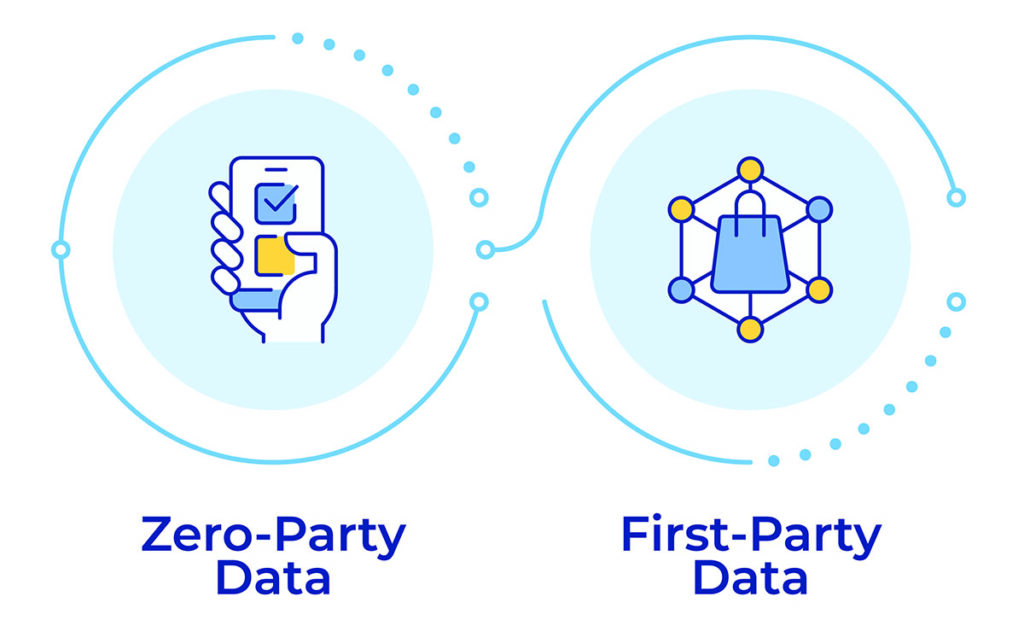
The post-cookie world isn’t coming — it’s already here. And for marketers, owning your data isn’t optional anymore. It’s survival.
As third-party cookies fade, brands are shifting their focus inward: collecting, understanding, and using the data they can truly trust. That shift has made zero-party and first-party data essential to modern marketing success.
While these two types of data often get lumped together, they serve very different — and equally powerful — purposes. Here’s how they work, why both matter, and how you can combine them to build a privacy-first strategy that actually delivers.
Understanding the Rise of Data Ownership
For years, third-party cookies carried the weight of audience targeting. But with browser restrictions, privacy laws, and consumer awareness reshaping the landscape, it’s clear: data ownership is now central to marketing success.
Brands need cookieless tracking solutions that preserve personalization without crossing privacy lines. That’s where zero-party and first-party data come in, and where tools like Matchbook help marketers keep those data sources connected, reliable, and actionable.
Together, these two data types form the foundation of accurate, ethical, and future-proof personalization.
What Is Zero-Party Data?
Zero-party data is information your audience intentionally shares with you. It’s volunteered, not tracked or inferred.
Think:
- Profile settings and preference centers that improve communication
- Chatbot answers where users specify their needs
- Self-declared goals in a fitness or finance app (“I’m saving for a home in 3 years”)
- Loyalty program profiles where customers select their favorite store locations or rewards
- Survey responses that reveal preferences or intent
Because customers choose to share it, zero-party data reflects a high level of trust and engagement. It shows intent — what someone wants — instead of just recording what they did.
In short: Zero-party data tells you why your customers click, buy, or bounce. The part of the story that analytics alone can’t capture.
What Is First-Party Data?
First-party data comes directly from your owned channels — your website, mobile app, CRM, or loyalty program. It includes:
- Website analytics and page interactions
- Purchase and browsing history
- App activity and session behavior
- Email engagement metrics
This data reveals what your customers actually do. It’s reliable, consent-based, and constantly updating as people interact with your brand.
In short: First-party data captures the what.
Key Differences Between Zero- and First-Party Data
While both are consent-based, they differ in how they’re collected and how they help you understand your audience.
| Aspect | Zero-Party Data | First-Party Data |
| Source | Voluntarily shared by customers | Collected from observed interactions |
| Insight Type | Motivations, preferences, intent | Behaviors, engagement patterns |
| Update Cycle | Static until customers update it | Continuously refreshed |
| Scalability | Limited by participation | Broader, ongoing stream of information |
| Management Focus | Storing declared preferences | Maintaining data accuracy and freshness |
Zero-party gives you context and intent; first-party gives you scale and depth.
Why Both Matter in a Privacy-First Era
Lean too hard on one, and you’re flying half-blind.
- Zero-party data without first-party data gives you intent but no proof of behavior.
- First-party data without zero-party data gives you actions, but not the motivation behind them.
Used together, they offer a more complete view of your customer — bridging what people do with why they do it.
That combination fuels:
- Smarter personalization: Campaigns that feel relevant, not invasive.
- Better data quality: Customer-declared insights validate observed behavior.
- Greater trust: Transparency earns permission and loyalty.
When customers understand how their data is used and see value in sharing it, they’re more likely to share again.
Common Pitfalls and How to Avoid Them
Even the best strategies can stumble. Here are the most common pitfalls marketers face:
- Overreliance on one data type.
Zero-party without first-party lacks context; first-party without zero-party misses intent. - Data decay.
Preferences evolve. Keep your records fresh through enrichment and validation. - Scalability challenges.
Zero-party data depends on participation. Build engagement with value exchanges, like tailored recommendations or loyalty perks. - Integration silos.
When systems don’t talk to each other, accuracy suffers.
It’s easy to let data strategy become a checklist. But when it’s built on balance and trust, it becomes the backbone of every strong customer relationship.
Best Practices for Using Zero- and First-Party Data Together
1. Balance collection and observation
Pair what customers say with what they do. Together, they create a fuller, truer picture.
2. Be transparent and ethical
Tell customers exactly why you’re collecting data and how it helps them. Transparency turns consent into collaboration.
3. Enrich and maintain accuracy
Outdated data limits personalization. Use solutions like Matchbook to unify identifiers, reduce duplication, and keep first-party data current, all without relying on cookies.
4. Integrate for actionability
Break down silos so your insights can move freely across marketing, sales, and analytics teams.
5. Reward participation
Make sharing feel worthwhile. Giving better recommendations, relevant content, or exclusive access can all encourage customers to engage again.
Why Matchbook Makes a Difference
Even the most robust data strategy can fall apart if information gets fragmented or stale. Matchbook ensures your data remains clean, unified, and relevant by:
- Connecting identities across devices and channels
- Preserving accuracy and compliance without cookies
It’s the connective layer that turns first-party data into something scalable, giving marketers confidence that their personalization efforts are built on truth, not guesswork.
The Bottom Line
Zero- and first-party data aren’t competitors; they’re partners. Used together, they give you a 360-degree view of your audience and a foundation for privacy-first personalization.
Pair intent with behavior, and you see your customers clearly: who they are, what they value, and how to reach them respectfully.
With reliable tools like Matchbook keeping your data honest and connected, you can focus on what really matters: creating experiences that feel personal, not just personalized.
Because at the end of the day, data isn’t just about technology. It’s about understanding people. And that’s what makes this kind of marketing worth doing.
Frequently Asked Questions
1. Is zero-party data just a buzzword?
Not at all. Zero-party data is a distinct and valuable type of information that customers intentionally share through quizzes, preference centers, and surveys. The term might be new, but the practice of transparent, trust-based data exchange has always been central to great marketing.
2. Can I build my strategy on zero-party data alone?
Not effectively. Zero-party data gives you intent (the why), but without first-party behavior, it lacks context. The strongest strategies use both to understand your audience fully.
3. How do I collect zero-party data without annoying customers?
Make it a value exchange. Offer something meaningful in return, like personalized recommendations, tailored content, or loyalty rewards. When customers see the benefit, they’re happy to share.
4. Where does third-party data fit into this picture?
Third-party data still has a role in expanding reach or validating information, but it should complement, not replace, zero- and first-party data. A privacy-first strategy starts with what you own and enhances it responsibly.